The Moisture Source
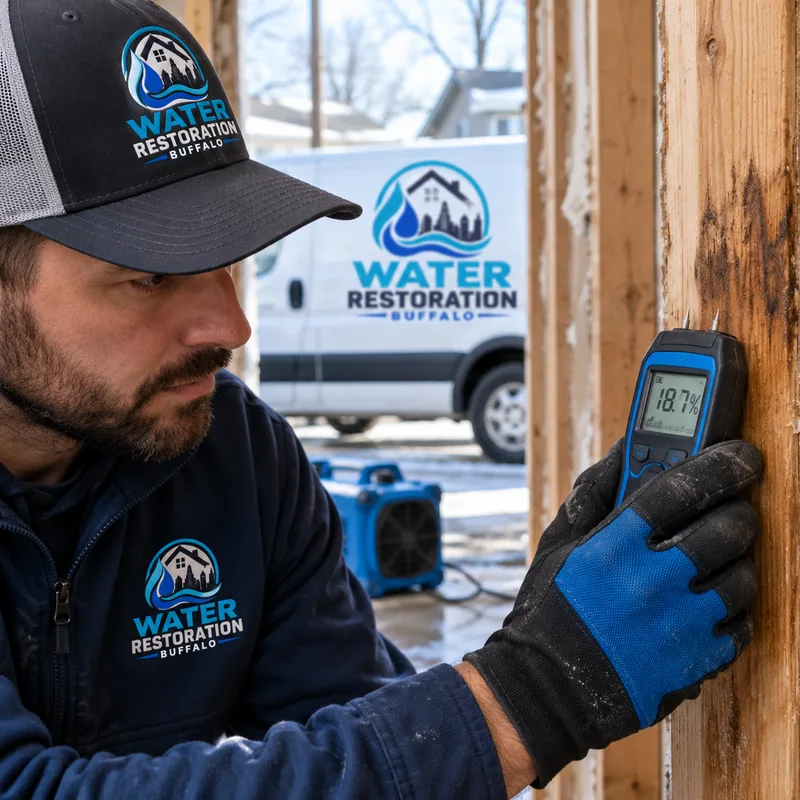
The contractor looks for active leaks, seepage, condensation, poor drainage or elevated material moisture. The source must be understood before affected finishes are closed again.
Serving Buffalo, New York & surrounding areas
Calls answered around the clock
Mold remediation · Buffalo, NY
Describe the mold problem once and get connected with a local contractor who handles remediation in the Buffalo area.
Understanding the work
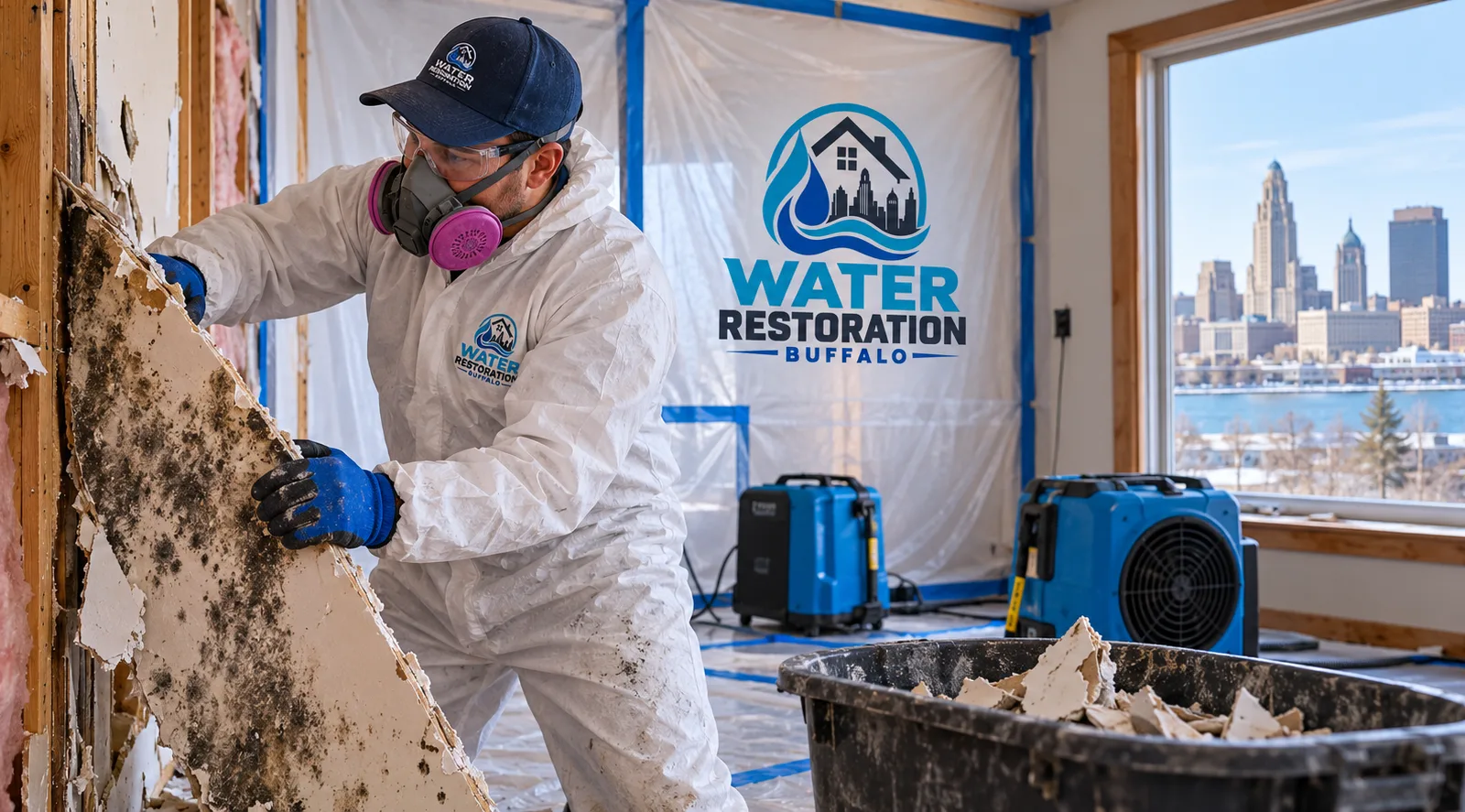
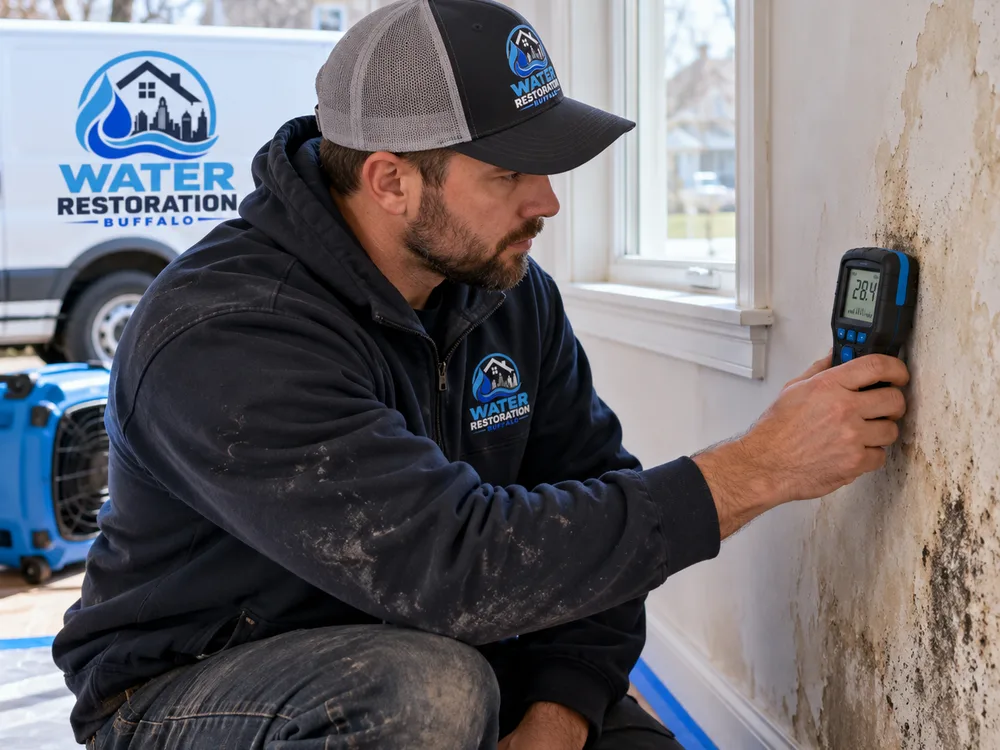
Buffalo mold remediation starts with identifying affected areas and the moisture condition that allowed growth to develop. A contractor may inspect visible staining, damp building materials, musty odors and nearby plumbing, roofing, foundation or ventilation conditions. The inspection helps define the work area and determines whether drywall, insulation, carpet, trim or other porous materials must be removed.
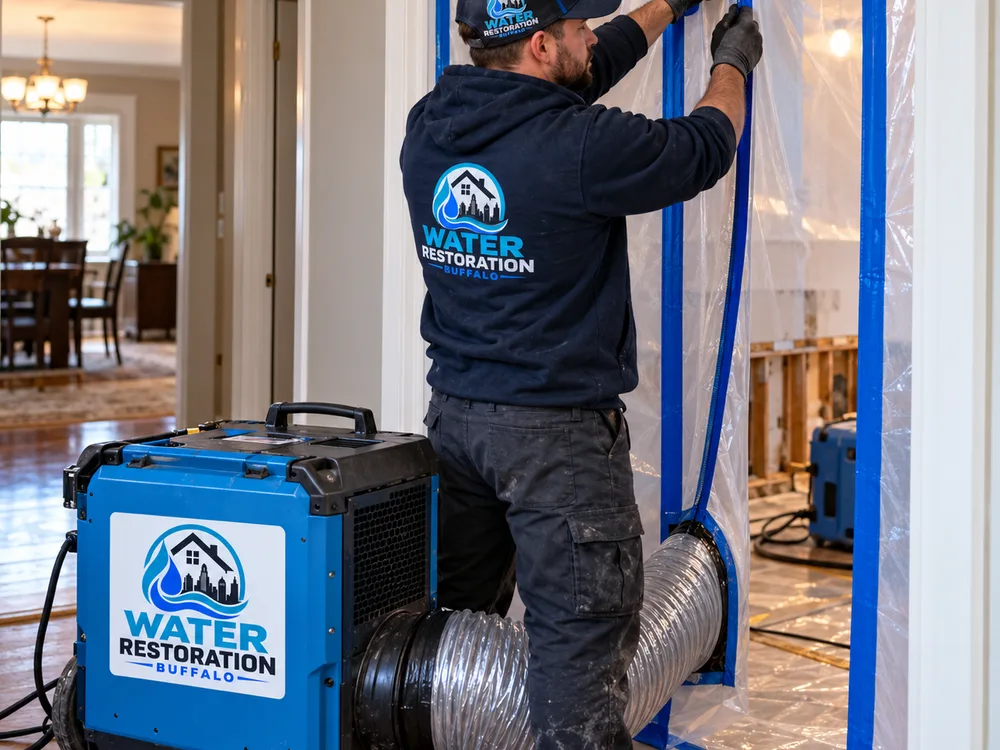
Containment is commonly built with plastic sheeting so dust and debris stay within the work zone. Contractors may use negative air pressure and HEPA-filtered air machines during removal. Nonporous and semi-porous surfaces that can remain are cleaned using methods suited to the material, while damaged porous materials are bagged for disposal. HEPA vacuuming and detailed surface cleaning follow removal.
Remediation and moisture correction are related but separate parts of the job. Cleaning mold without addressing a leaking pipe, roof opening, condensation problem or recurring basement dampness leaves the underlying condition unresolved. If a property has active water damage, water restoration in Buffalo may need to occur before or alongside remediation. The contractor should explain which work is included and which moisture repairs require another trade.
Buffalo's freeze-thaw cycles, snow, rain and humid summer periods can expose weak points around roofs, foundations and exterior openings. Older homes in neighborhoods such as Elmwood Village and Allentown may also contain plaster walls, wood lath and layered finishes that require careful investigation before removal begins. The proper scope depends on the affected materials, not simply the size of the visible stain.
Initial assessment
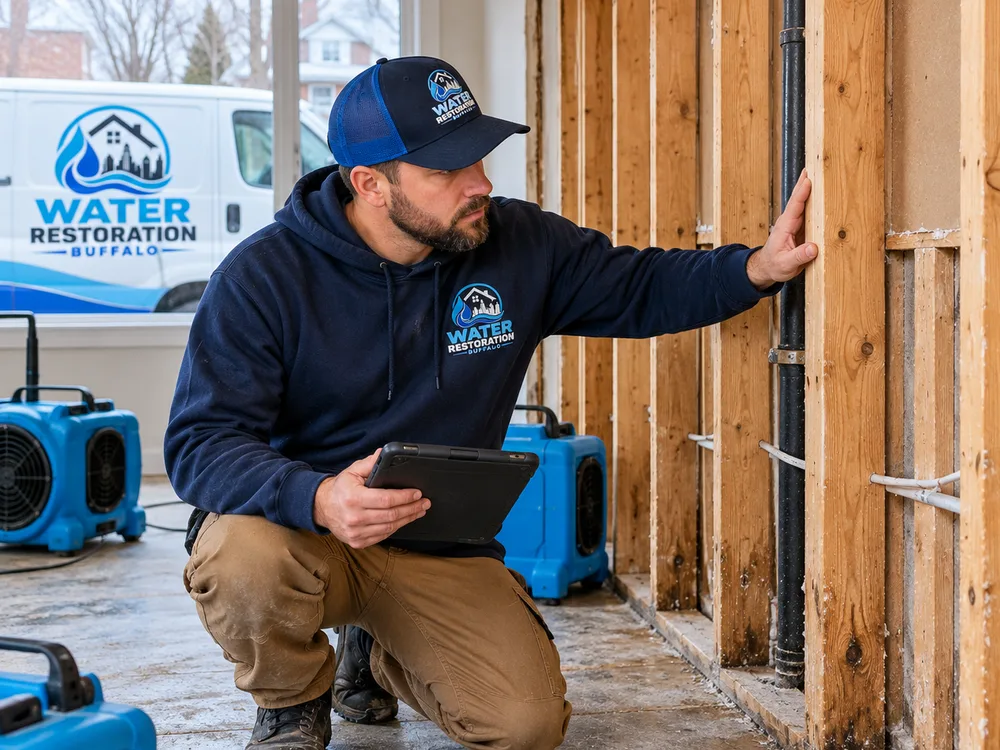
The contractor looks for active leaks, seepage, condensation, poor drainage or elevated material moisture. The source must be understood before affected finishes are closed again.
Visible growth may not show the full boundary. Wall cavities, flooring edges, insulation and areas around plumbing penetrations may need further inspection.
Drywall, insulation and carpet often require removal when materially affected. Framing, masonry, tile and some other surfaces may be suitable for cleaning if they remain sound.
The location and scope determine how the work area should be isolated. Doorways, HVAC openings and paths used to carry debris out of the property may need protection.
A contractor considers whether the affected room can be isolated, whether belongings must be moved and how occupants will avoid the work zone.
Before reconstruction, the treated area should be dry, visibly clean and ready for any agreed follow-up assessment. Replacement materials should not conceal unresolved dampness.
The remediation sequence
The contractor reviews visible conditions, moisture readings, affected materials and likely sources. Homeowners should mention past leaks, flooding, odors, previous cleaning attempts and where symptoms first appeared.
Active water entry is stopped or assigned to the appropriate trade. Drying may be needed before removal, during the work or after hidden damp materials are exposed.
Belongings are moved or protected, containment is installed and air movement is controlled as the job requires. HVAC registers within the work zone may be sealed to limit dust movement.
Affected porous materials are removed according to the agreed scope. Remaining surfaces are HEPA vacuumed and cleaned using methods appropriate for wood, masonry, metal or other substrates.
The contractor checks that materials intended to remain are dry and that the treated area is visibly clean. If independent sampling or clearance is part of the plan, it is usually arranged before reconstruction.
Drywall, insulation, trim and finishes can be replaced after remediation conditions are satisfied. The contractor should identify whether rebuilding is included or will be handled under a separate scope.
One call lets you explain the affected rooms, moisture history and visible conditions once, then speak directly with a local contractor who handles mold remediation.
CALL NOW: +1 716 274 8863Work context
Common questions
Testing is not automatically required for every visible mold condition. A contractor can explain whether the source and affected materials are clear enough to develop a scope without sampling. Testing may be useful when growth is hidden, the source is uncertain, occupants have specific concerns or documentation is required. If independent assessment is desired, ask whether the assessor and remediation contractor should be separate parties.
Drywall that has substantial mold growth, deterioration or contamination through its paper facing is commonly removed rather than cleaned in place. The contractor will consider how deeply it is affected, whether the cavity behind it is damp and whether removal is needed to reach insulation or framing. Sound materials outside the affected boundary may remain.
Occupancy depends on the location, size and containment needs of the job. A contained room may be easier to isolate than mold affecting a central hallway, HVAC area or several occupied rooms. The contractor should explain access restrictions, air-control measures and which parts of the property occupants should avoid.
Describe where the growth or odor is present, when it appeared and any known leak, seepage or condensation history. Mention the affected materials, whether water is still entering, any prior cleanup and whether the area is a basement, attic, bathroom, living area or commercial space. Photographs and notes about previous repairs can help when you speak directly with the contractor.
That depends on the source and the contractor's scope. Minor moisture corrections may be included, while roofing, plumbing, drainage, foundation or HVAC work may require another trade. Ask for a clear explanation of who will correct the source and whether that work must be completed before remediation continues.
Describe the mold condition by phone, and we connect you with a local contractor who handles this type of work in Buffalo and the surrounding area. You discuss the property and scope directly with the contractor, receive the contractor's quote and decide whether to proceed. Calls are answered around the clock, without an online form or email wait.
One call starts the connection
Tell us what you see, where it is and what may have caused it. We will connect you with a local mold remediation contractor who can discuss the next step directly with you.
Service area
Contractors in our network cover Buffalo and the surrounding area, so help stays close when lake-effect storms, frozen plumbing, or basement flooding strike.