Water Source and Category
The contractor identifies whether the water came from a clean supply line, an appliance, rain intrusion, a drain backup, or another source. Water category affects handling, cleaning, and material removal decisions.
Serving Buffalo, New York & surrounding areas
Calls answered around the clock
Water damage restoration · Buffalo, NY
Describe the water problem once and get connected with a local contractor who handles property drying and restoration.
Understanding the work
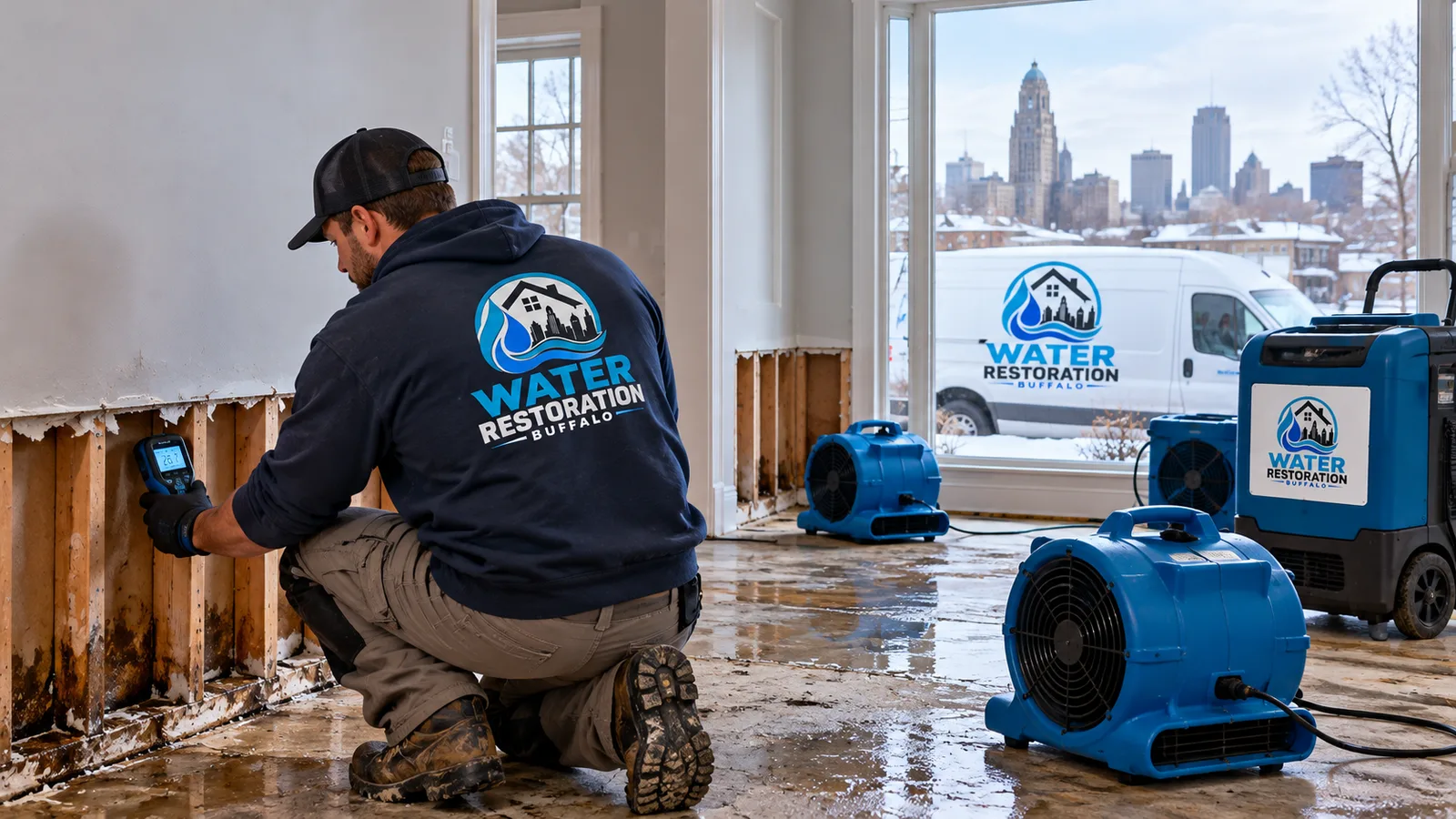
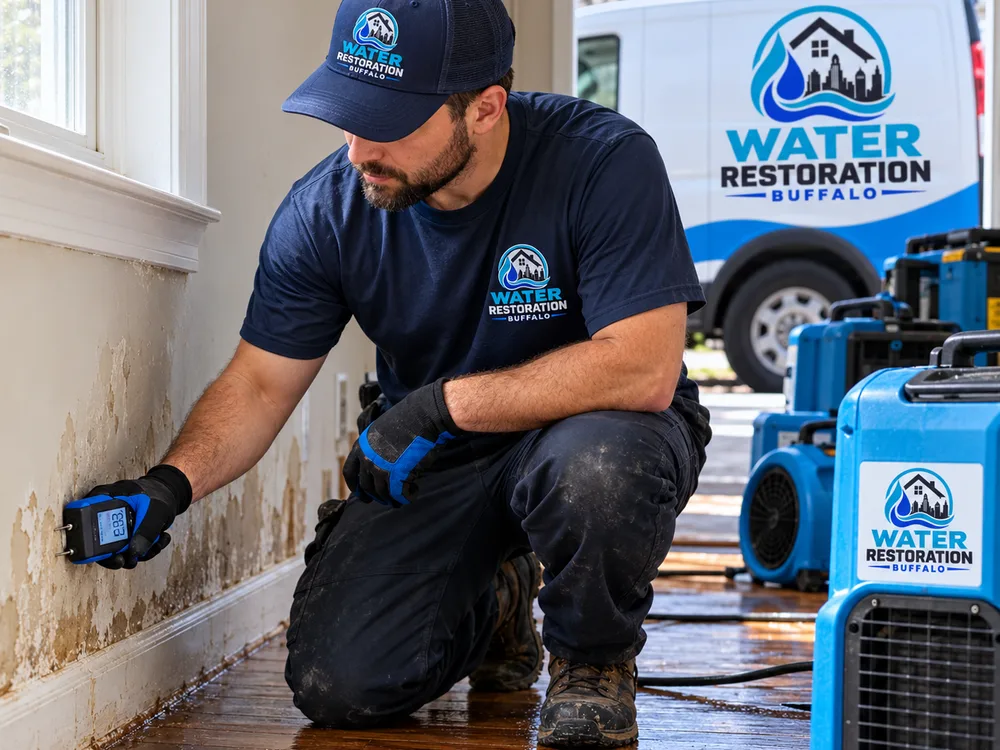
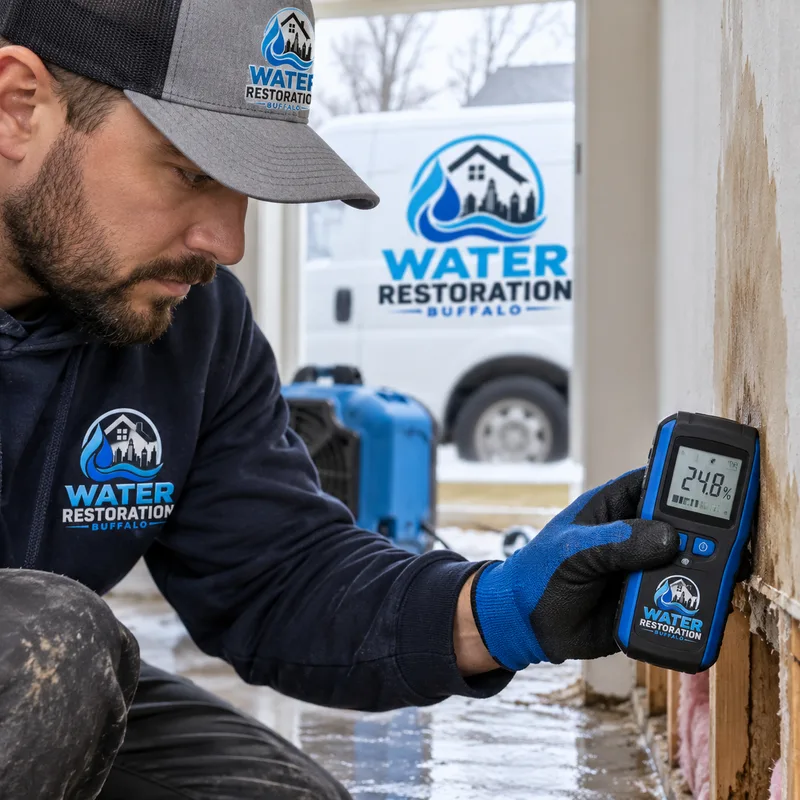
Water damage restoration Buffalo NY property owners need starts with finding the source, checking how far the moisture traveled, and choosing the right drying plan. Standing water may be visible, but moisture can also move under flooring, into drywall, through insulation, and along framing. A contractor may use moisture meters, infrared imaging, and targeted inspection openings to map the affected area before equipment is placed.
Buffalo's freeze-thaw cycles can contribute to split supply lines, failed exterior penetrations, ice-related roof leaks, and foundation seepage. Heavy rain and snowmelt can also expose drainage or sump-pump problems. Older houses in areas such as the Elmwood Village and the West Side may have plaster walls, wood flooring, and concealed wall cavities that require careful moisture checks. Basements in South Buffalo often contain mechanical equipment or finished rooms, which can make the source and extent of damage less obvious.
The initial priority is stopping the water when that can be done safely. Extraction follows when water is pooled or materials are saturated. Contractors then remove materials that cannot be dried or cleaned, position air movers and dehumidifiers, and monitor moisture until the affected assemblies reach suitable drying goals. Water restoration can include cleanup and rebuilding coordination, but the exact scope depends on the water source, materials involved, and time the moisture remained in place.
Water Restoration Buffalo connects callers with independent local contractors serving Buffalo and nearby communities. You explain the leak, flooding, or damp area once. The contractor discusses the property directly with you, evaluates the work, provides the quote, and lets you decide whether to proceed.
Initial assessment
The contractor identifies whether the water came from a clean supply line, an appliance, rain intrusion, a drain backup, or another source. Water category affects handling, cleaning, and material removal decisions.
Dry-looking paint or flooring can conceal wet drywall, subfloor, insulation, and framing. Moisture readings help define the affected area and guide equipment placement.
Solid wood, framing, masonry, and some finishes may be candidates for controlled drying. Swollen composite materials, contaminated porous items, and badly damaged drywall may need removal.
Wet outlets, affected service equipment, sagging ceilings, weakened floors, and contaminated water require special caution. Occupants should avoid entering any area that appears unsafe.
Buffalo basements may hold furnaces, water heaters, storage, or finished living space. A contractor checks water depth, floor and wall materials, drainage, and the path moisture took.
Photos, moisture readings, affected-material notes, and equipment records can support a clear work plan. The contractor explains the proposed scope and provides the quote directly.
The restoration sequence
Share where the water appeared, the suspected source, when it was noticed, whether the source is stopped, and which rooms or levels are affected. Calls are answered around the clock, and we connect you with a local contractor who handles this type of work.
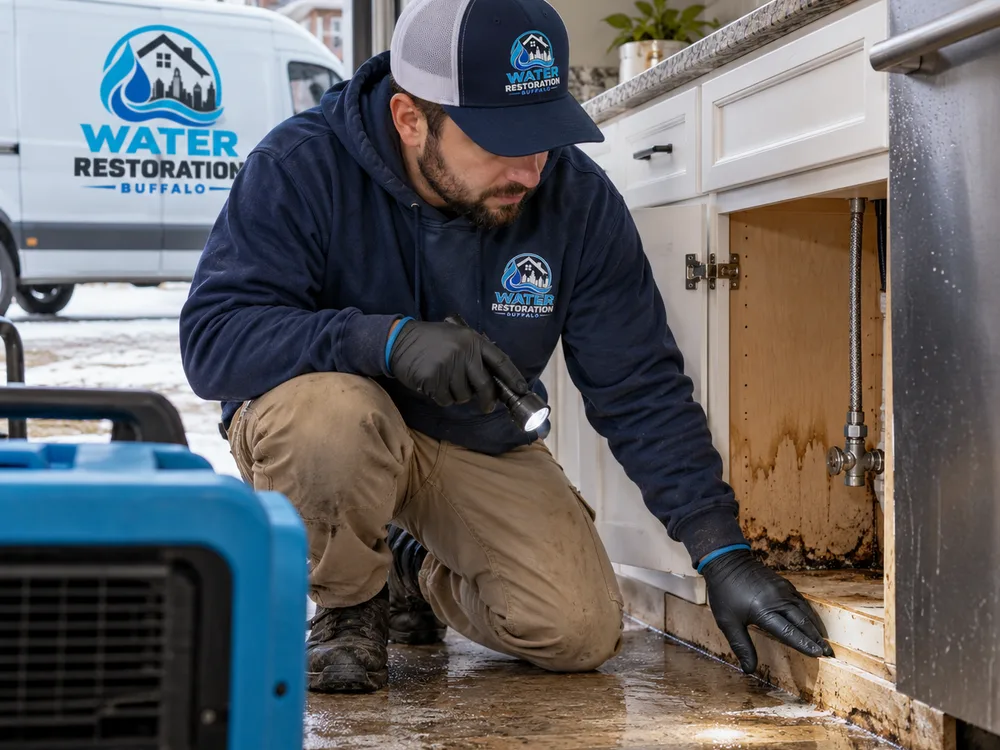
The contractor evaluates visible damage and checks adjacent materials. This may include baseboards, wall cavities, flooring layers, ceilings, insulation, and rooms beside or beneath the original leak.
Standing water is extracted when appropriate. Damaged or contaminated porous materials may be removed so trapped moisture can be reached and the remaining structure can dry.
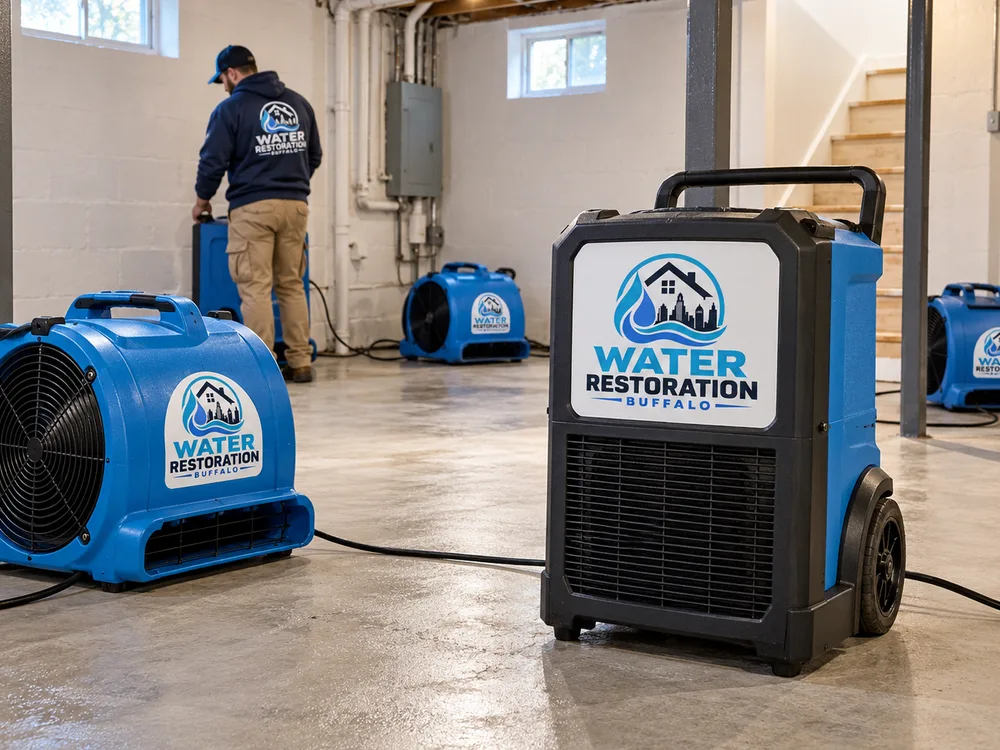
Air movers increase evaporation while dehumidifiers remove moisture from the air. Containment or targeted drying systems may be used when the affected area needs to be isolated.
The contractor takes follow-up readings and adjusts equipment based on actual conditions. Drying is complete when the affected materials reach suitable goals, not simply when surfaces feel dry.
Once drying and cleaning are complete, the contractor identifies repairs such as replacing drywall, insulation, trim, flooring, or finishes. You review the scope and decide how to proceed.
One phone call replaces repeated searches and callbacks. Describe the water source and affected rooms once, then speak directly with a contractor who serves the Buffalo area.
CALL NOW: +1 716 274 8863Work context
Common questions
Be ready to describe the water source, affected rooms, approximate discovery time, and whether water is still entering the property. Mention standing water, sewage or drain involvement, wet electrical fixtures, sagging ceilings, and whether the basement or another level is affected. Photos may help when you speak directly with the contractor, but you do not need to diagnose the damage yourself.
Wet drywall does not always require full removal, but its condition, water category, insulation, coatings, and time exposed all affect the decision. A contractor may use moisture readings and small inspection openings to determine whether drying is practical. Drywall that is crumbling, contaminated, or trapping wet insulation is more likely to be removed.
Some hardwood floors can be dried when the water source and conditions make restoration practical. The contractor checks moisture in the boards and subfloor, looks for cupping or buckling, and may use specialty floor-drying equipment. Laminate, engineered products, and wood-based underlayment can respond differently, so the flooring type matters.
Water involving sewage or a drain backup requires controls for contamination and exposure. Occupants should avoid contact with the water and affected porous materials. The contractor determines the removal, cleaning, and disposal scope based on the source and the materials reached.
You can report the loss to your carrier while also taking reasonable steps to prevent additional damage. Coverage and documentation requirements depend on the policy and cause of loss. Keep photos and relevant records, and ask the contractor what job documentation will be provided.
Drying completion should be based on moisture measurements and material-specific drying goals rather than touch alone. The contractor may compare affected materials with dry areas of the building and track readings during the work. Ask how the readings will be documented and what conditions must be met before repairs begin.
You describe the water problem once, and we connect you with a local independent contractor who handles water damage restoration in the Buffalo area. You then discuss the inspection, proposed work, timing, and quote directly with that contractor. The decision to proceed remains yours.
One call starts the connection
Describe what happened, where the water traveled, and what materials are wet. We will connect you with a local contractor who can discuss the restoration work directly with you.
Service area
Contractors in our network cover Buffalo and the surrounding area, so help stays close when lake-effect storms, frozen plumbing, or basement flooding strike.