Water source and category
The first questions concern where the water came from, whether the source has stopped, and whether contamination changes the required protective measures or disposal plan.
Serving Buffalo, New York & surrounding areas
Calls answered around the clock
Residential restoration · Buffalo, NY
Describe the water damage once and get connected with a local contractor who handles residential drying and restoration.
Understanding the work
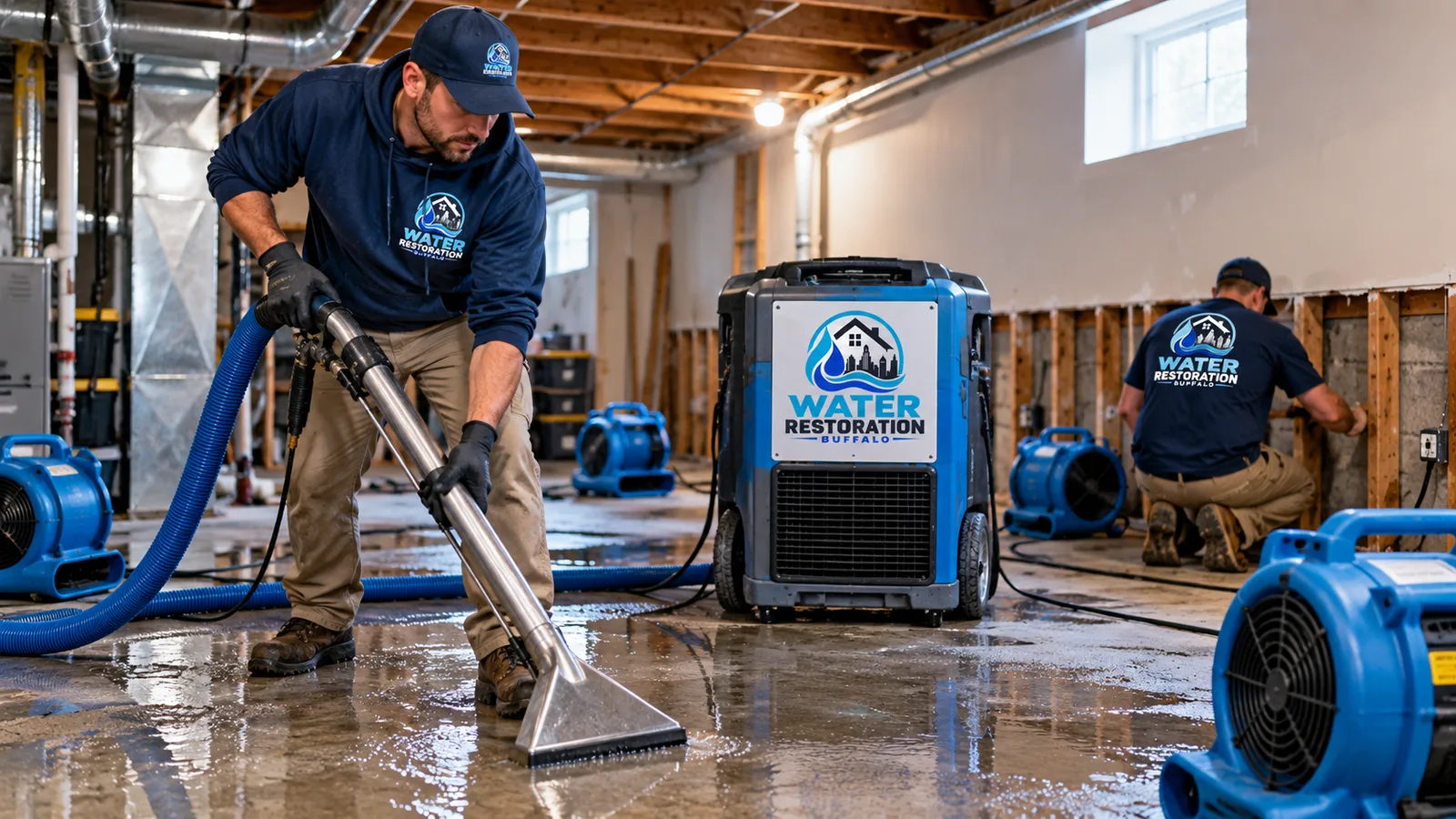
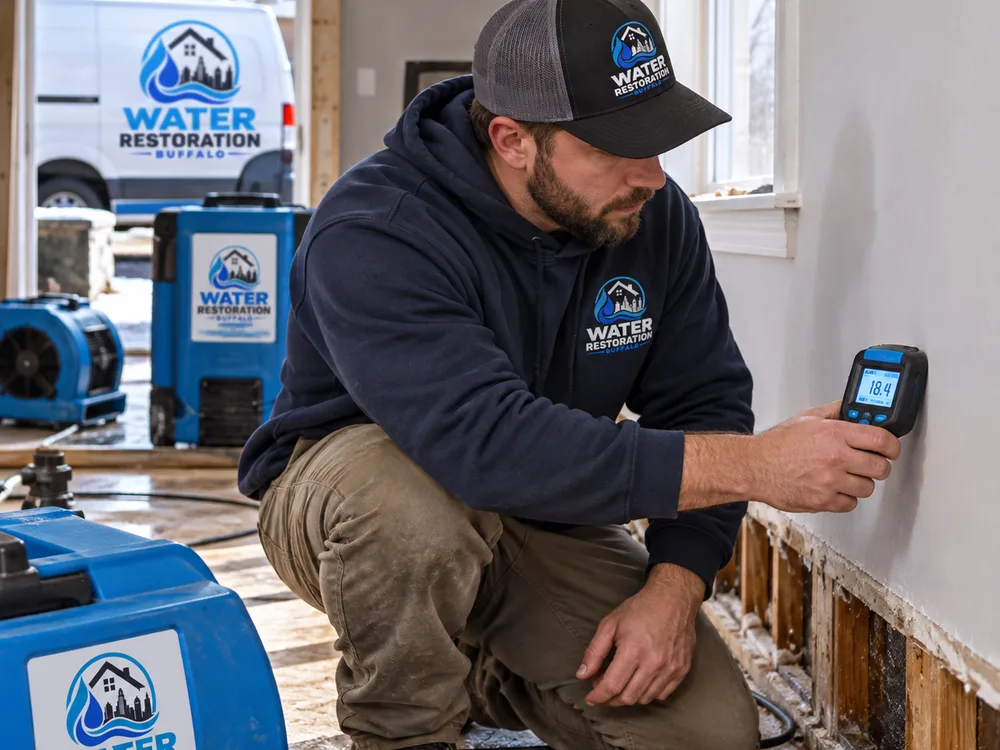
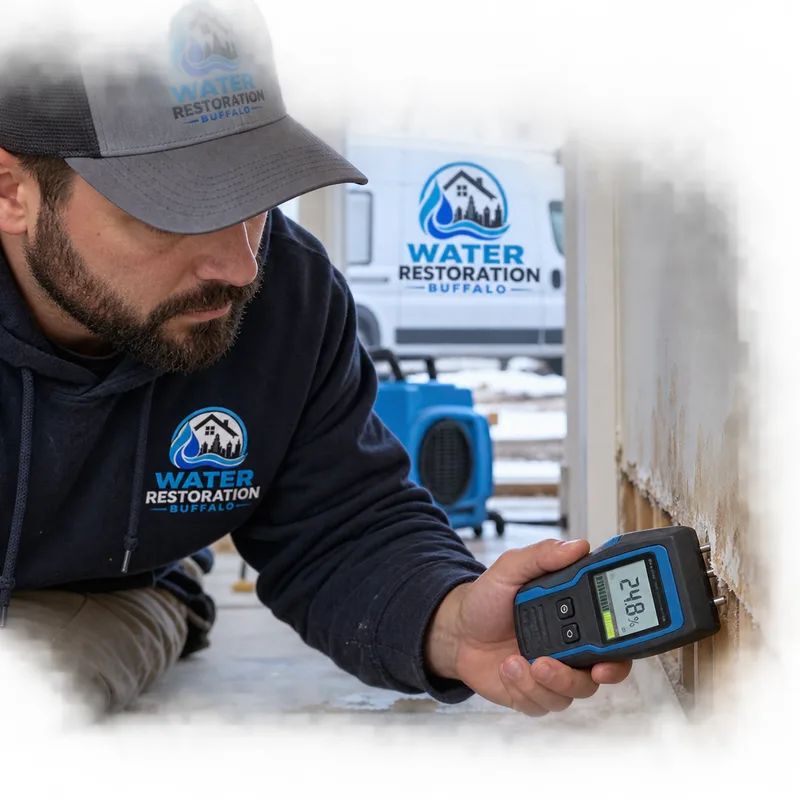
Residential water damage restoration Buffalo NY homeowners need starts with controlling the source when it can be done safely. The contractor then assesses where water traveled, removes standing water, checks affected materials, and sets up drying equipment. Moisture meters and thermal imaging may help trace damp areas beyond visible stains, including wall cavities, subfloors, insulation, and the underside of finished surfaces.
The response depends on the source and how long materials remained wet. A clean supply-line leak is handled differently from water containing sewage or outdoor floodwater. Contractors commonly classify water by contamination category and assess the extent of affected materials before deciding what can be dried and what should be removed. Porous materials such as carpet pad, drywall, and insulation may require different treatment than concrete, framing, or tile.
Buffalo winters create an added risk when pipes freeze in exterior walls, unheated basements, crawl spaces, or poorly insulated areas. Snowmelt and heavy rain can also enter through foundation openings, failed sump systems, or low basement windows. In older homes found across parts of the West Side and Elmwood Village, plaster walls, wood flooring, and concealed cavities can complicate moisture tracing. South Buffalo homes with basements may require close inspection at the foundation walls, floor edges, and utility penetrations.
Broader water restoration in Buffalo may involve other property types or damage conditions. This service is focused on occupied houses, household materials, and the steps needed to dry and restore residential spaces.
Before drying begins
The first questions concern where the water came from, whether the source has stopped, and whether contamination changes the required protective measures or disposal plan.
Water can wick upward through drywall, spread beneath flooring, and collect inside wall cavities. Readings from both affected and unaffected materials help establish drying goals.
The contractor assesses drywall, plaster, insulation, carpet, wood flooring, cabinetry, framing, and subflooring. Material condition and contamination affect whether drying or removal is appropriate.
Standing water near outlets, panels, appliances, sagging ceilings, or weakened flooring requires caution. Homeowners should avoid entering an area that appears electrically or structurally unsafe.
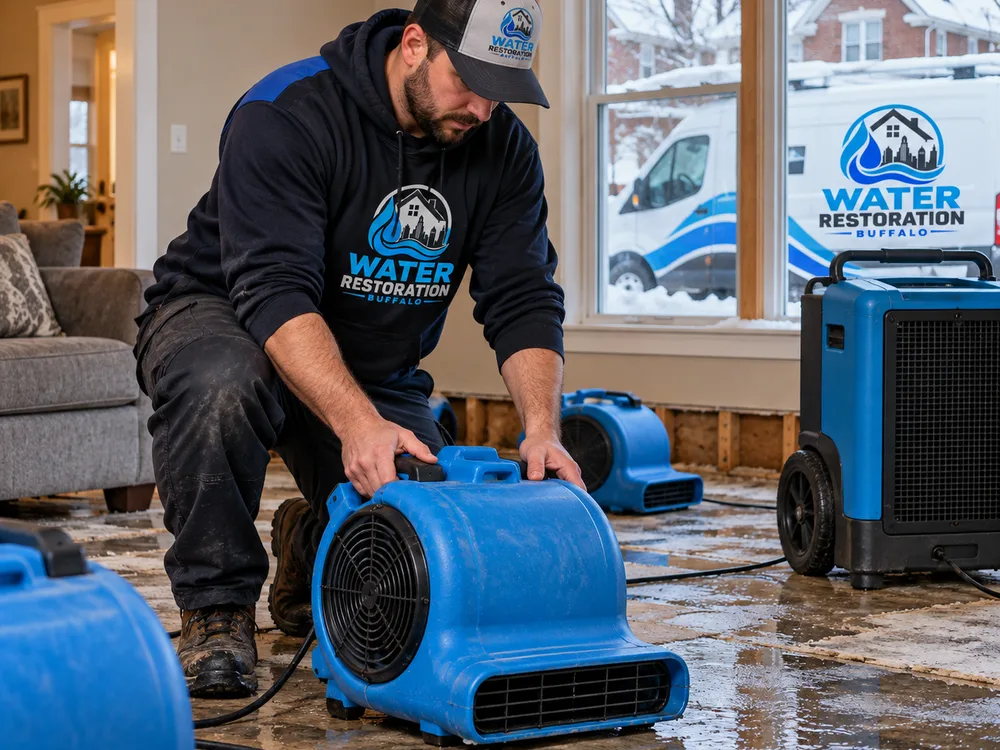
Equipment placement is based on the room layout, wet materials, and moisture readings. Air movers increase evaporation while dehumidifiers remove moisture from the air.
Photos, moisture records, and an inventory of affected belongings may support insurance discussions. The homeowner should ask who will move, clean, store, or dispose of contents.
The restoration sequence
Explain the likely source, affected rooms, visible standing water, when the problem was found, and whether electricity, sewage, or a sagging ceiling is involved. We use those details to connect you with a local contractor who handles the type of residential loss described.
The contractor discusses access, conditions at the house, and the likely first inspection steps. The contractor provides the quote and proposed scope, and you decide whether to proceed.
The contractor identifies the moisture boundary and checks materials that may conceal water. Work areas may be isolated when demolition or contaminated water requires control of dust and debris.
Standing water is extracted first. Depending on the findings, wet carpet pad, insulation, drywall, trim, or other materials may be removed so trapped moisture can escape.
Air movers and dehumidifiers run while the contractor takes follow-up moisture readings. Drying continues until the materials being retained reach an appropriate target based on unaffected areas or material-specific conditions.
Cleaning and odor treatment depend on the water category and materials involved. Once drying is documented, repairs may include replacing drywall, insulation, flooring, trim, paint, or other finishes included in the agreed scope.
One phone call lets you describe the leak, burst pipe, basement water, or appliance overflow once and speak with a contractor who serves Buffalo-area homes.
CALL NOW: +1 716 274 8863Work context
Common questions
Only take steps that are safe and do not expose you to electricity, sewage, unstable ceilings, or contaminated water. If it is safe to do so, stop the water at an accessible shutoff and move dry valuables away from the affected area. Do not enter standing water near electrical equipment or outlets.
The decision depends on the water category, moisture extent, material condition, insulation behind the wall, and whether the cavity can be dried effectively. Clean water that was addressed before deterioration may allow selective drying, while contaminated, crumbling, swollen, or inaccessible material often requires removal.
No, removal depends on what became wet and the source of the water. Bare concrete and exposed framing may be dried and cleaned, while saturated carpet pad, insulation, composite trim, or contaminated drywall may need to come out. The contractor should explain the moisture readings and basis for each recommendation.
Be ready to describe the source, affected rooms, approximate discovery time, visible water depth, flooring type, and any sewage, electrical, or ceiling concerns. Mention whether the water is still running and whether the main shutoff or fixture valve is accessible. Photos can be useful when speaking directly with the contractor.
Contents may be moved within the home, placed in a dry staging area, cleaned, or documented for removal depending on their condition. Ask the contractor to define who handles contents and where items will go before work begins. Avoid discarding damaged belongings until you have recorded them if an insurance claim may be involved.
Coverage depends on the cause of the loss and the terms of the policy. Sudden plumbing failures may be treated differently from groundwater, flooding, seepage, or deferred maintenance. Contact the insurer directly, document the source and affected areas, and ask the contractor what job records can be provided.
Drying should be evaluated with moisture readings rather than appearance alone. The contractor may compare affected materials with dry areas in the home or use appropriate material targets. Ask to review the final readings before concealed cavities are closed and finish materials are replaced.
Describe the residential water damage once by phone, and we connect you with an independent local contractor who handles that type of work in Buffalo and the surrounding area. You speak with the contractor about the scope and quote, then decide whether to move forward.
One call starts the connection
Pick up the phone, explain what happened once, and get connected with a local residential restoration contractor who can discuss the next steps for your home.
Service area
Contractors in our network cover Buffalo and the surrounding area, so help stays close when lake-effect storms, frozen plumbing, or basement flooding strike.