Water source and category
The source affects handling. A clean supply-line release differs from appliance discharge, drain backup, floodwater, or sewage. Contamination can change what may be cleaned and what should be removed.
Serving Buffalo, New York & surrounding areas
Calls answered around the clock
Water restoration resources · Buffalo, NY
Describe the water damage once and get connected with a local contractor who handles property drying and recovery.
Understanding water damage
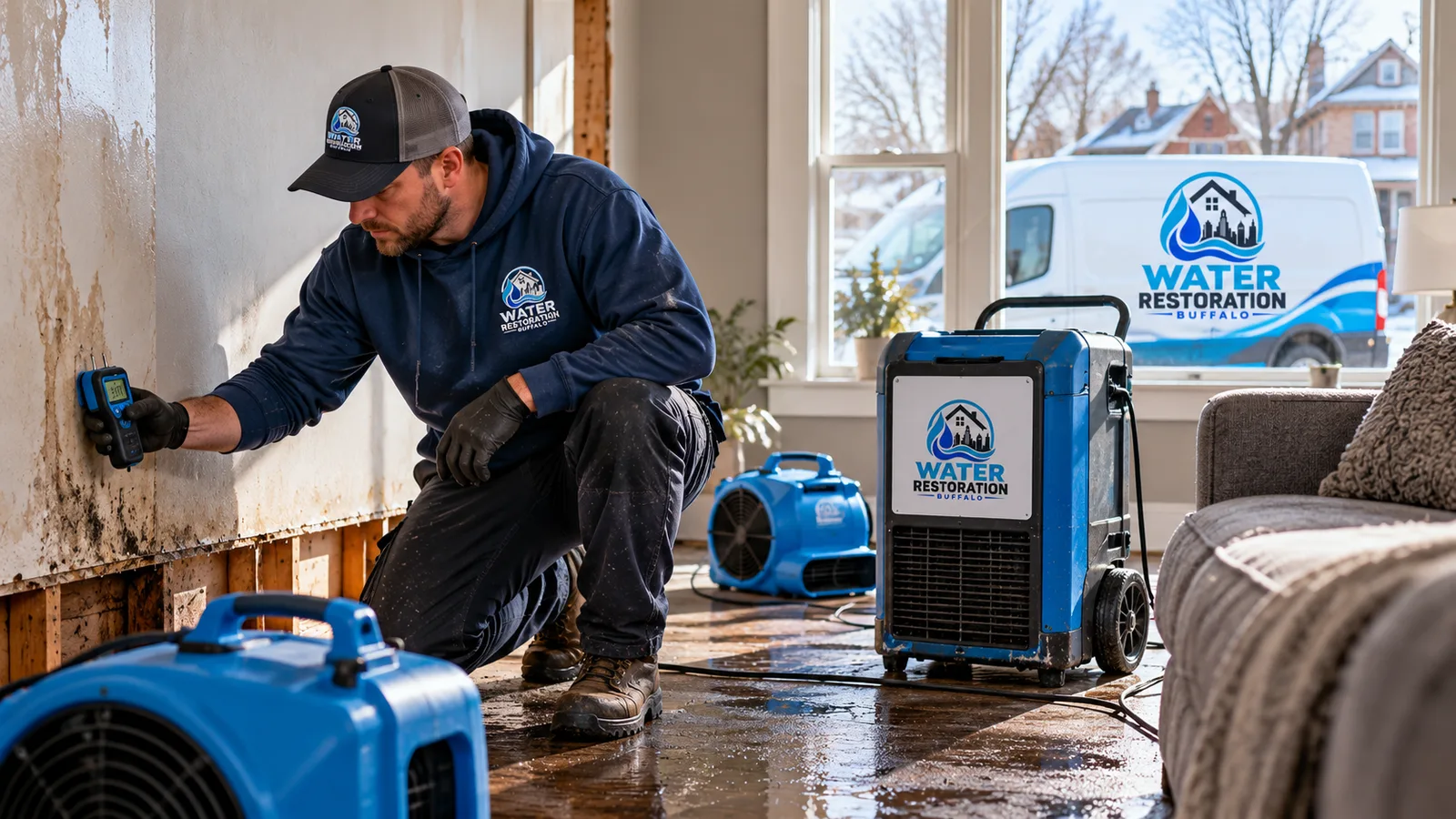
Buffalo NY water restoration resources should help you make sound decisions before damaged materials are covered, discarded, or allowed to stay wet. The basic sequence is to stop the water when safe, identify the source, document visible damage, remove standing water, assess moisture migration, dry the affected areas, clean salvageable materials, and repair what cannot remain.
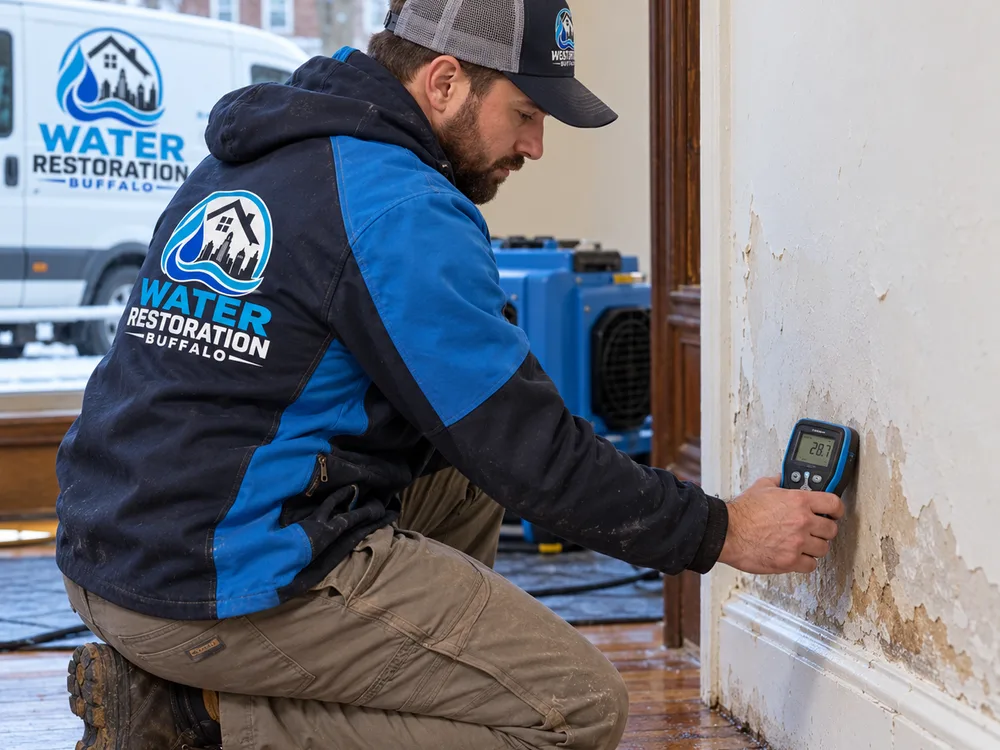
Water can travel under flooring, behind baseboards, through wall cavities, and into insulation. A dry surface does not prove that the assembly beneath it is dry. A contractor may use pin or pinless moisture meters, infrared imaging as a screening tool, and thermo-hygrometers to compare material moisture with indoor temperature and relative humidity. Infrared images do not directly measure moisture, so suspicious areas generally need confirmation with a moisture meter.
Buffalo's freeze-thaw conditions can contribute to burst supply lines, ice-related roof leaks, and water entering through vulnerable exterior assemblies. Snowmelt may also expose drainage or foundation problems. In older city housing, including many homes in Elmwood Village and the West Side, plaster walls, wood lath, hardwood flooring, and older plumbing can affect demolition and drying decisions. Basements in South Buffalo may contain finished rooms, stored belongings, mechanical equipment, or floor drains, all of which change the cleanup plan.
If water is near electrical equipment, a sagging ceiling, or suspected sewage, keep away from the affected area and contact the appropriate utility or public safety authority when immediate hazards exist. For broader help arranging water restoration in Buffalo, describe what happened and get connected with a local contractor who serves the area.
Initial assessment
The source affects handling. A clean supply-line release differs from appliance discharge, drain backup, floodwater, or sewage. Contamination can change what may be cleaned and what should be removed.
Visible staining may be smaller than the wet area. The contractor checks adjoining walls, flooring, subfloor, insulation, cabinets, and rooms beneath the source to define the affected materials.
Nonporous surfaces may be cleaned, while drywall, carpet pad, insulation, and engineered wood require material-specific decisions. Duration of exposure, contamination, swelling, delamination, and access all matter.
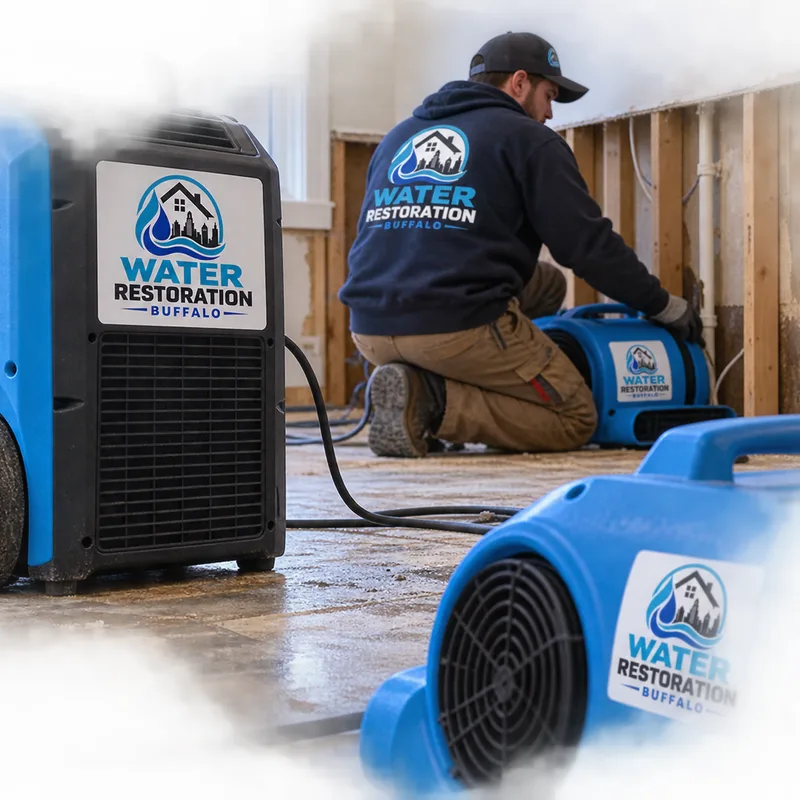
Extraction removes liquid water first. Air movers promote evaporation, and dehumidifiers remove moisture from the air. Contractors monitor readings and adjust equipment placement as conditions change.
Photos, moisture readings, removal records, and a written scope can help explain what was affected. The contractor should distinguish mitigation work from later reconstruction such as drywall, trim, paint, or flooring replacement.
Cold weather can complicate ventilation and frozen-pipe access. Older plaster, concealed cavities, masonry basement walls, and tightly packed rooms may require a drying plan tailored to the building.
Damage response sequence
The first task is stopping additional water when it can be done safely. The contractor also looks for electrical exposure, unstable ceilings, contaminated water, and affected heating equipment before cleanup starts.
The contractor records visible damage and takes moisture readings in affected and comparison areas. This helps set drying boundaries and reduces the chance that concealed wet materials are overlooked.
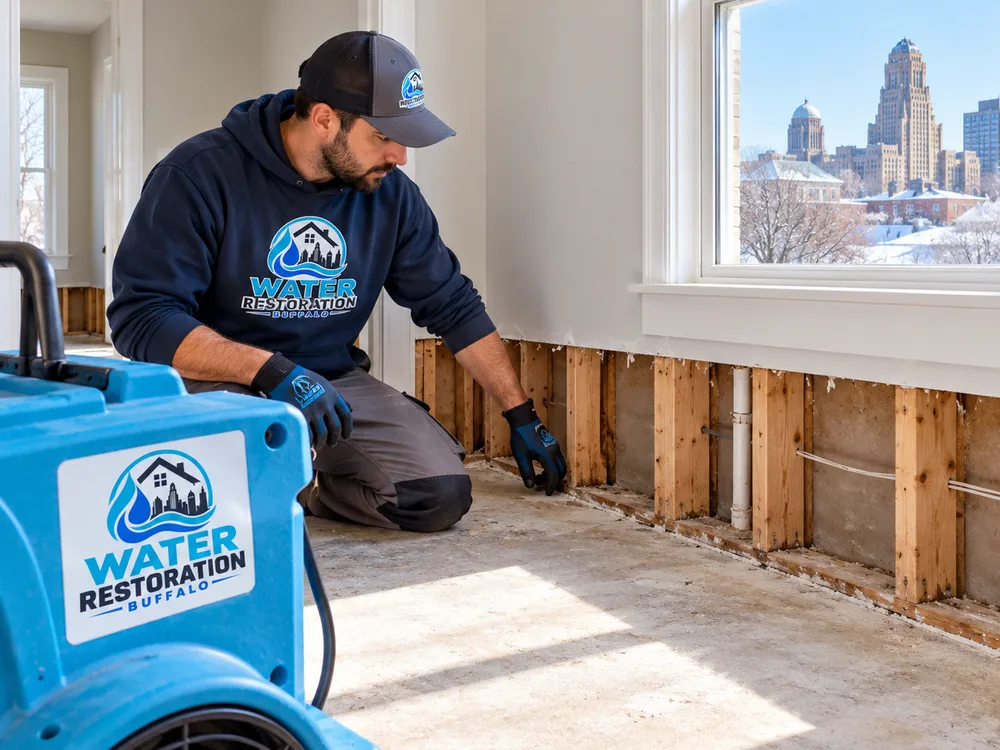
Standing water is extracted. Baseboards, drywall, insulation, carpet pad, or flooring may be opened or removed when contamination, damage, or limited airflow prevents effective drying.
Air movers and dehumidifiers are arranged around the actual moisture pattern. Readings are taken during drying so equipment can be repositioned and materials can be evaluated against an appropriate dry standard.
Affected surfaces are cleaned according to the water source and material. Once the drying work is complete, the contractor identifies repairs needed to return walls, floors, ceilings, cabinets, or trim to usable condition.
Water Restoration Buffalo takes the details by phone and connects you with an independent local contractor who handles this work. The contractor discusses the scope and quote with you, and you decide whether to proceed.
One phone call replaces the search through multiple contractors: explain the source, affected rooms, and visible damage once, then speak directly with a local contractor who can assess the work.
CALL NOW: +1 716 274 8863Work context
Common questions
Describe the water source, when it was discovered, whether the water is still entering, which rooms are affected, and whether sewage or electrical equipment may be involved. Mention the building level, flooring type, finished basement areas, and any visible ceiling sagging so the contractor can understand the initial scope.
The decision depends on contamination, material condition, moisture readings, exposure duration, and whether air can reach the wet assembly. Swollen composite materials, delaminated flooring, saturated insulation, and contaminated porous materials are more likely to require removal than sound materials that can be cleaned and dried.
No. Infrared imaging can reveal temperature patterns associated with evaporation or missing insulation, but it does not measure moisture directly. A contractor typically confirms suspicious patterns with a moisture meter and physical inspection.
Mitigation controls damage through extraction, selective removal, cleaning, drying, and monitoring. Reconstruction restores removed or damaged finishes, which may include drywall, plaster repair, trim, flooring, cabinets, and paint. Ask whether the contractor's scope covers one phase or both.
Do not use household fans to spread air across water that may contain sewage, chemicals, or outdoor contaminants. Keep people and pets out of the affected area and let the contractor determine containment, protective measures, removal, and cleaning requirements.
Expect drying equipment to run continuously unless the contractor gives different instructions. Rooms may be warm or noisy, doors may need specific positions, and access may be limited. The contractor should monitor moisture conditions rather than relying on appearance alone.
You describe the water damage by phone, and we connect you with a local contractor who serves Buffalo and the surrounding area. You then discuss the property, proposed work, quote, and scheduling directly with that contractor. The decision to proceed remains yours.
One call starts the connection
Describe the source and affected areas once. We will connect you with a local contractor who can discuss moisture assessment, cleanup, drying, and the repairs your property may need.
Service area
Contractors in our network cover Buffalo and the surrounding area, so help stays close when lake-effect storms, frozen plumbing, or basement flooding strike.